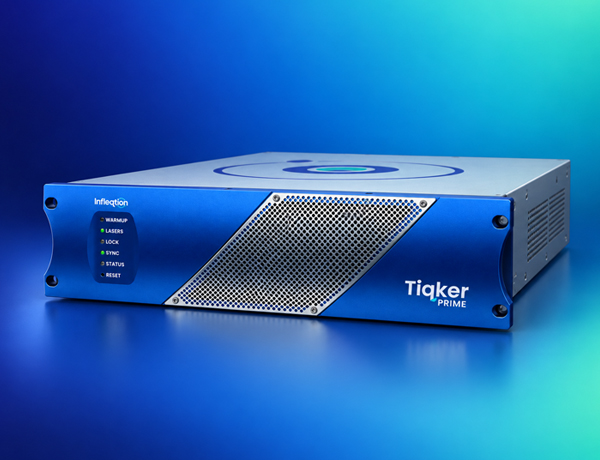
Infleqtion’s Tiqker Optical Clock Runs 2 Weeks in Navy Exercise
Infleqtion runs its compact optical atomic clock ‘Tiqker’ nonstop for two weeks in U.S. Navy exercise… demonstrating next-generation navigation technology against GPS disruption
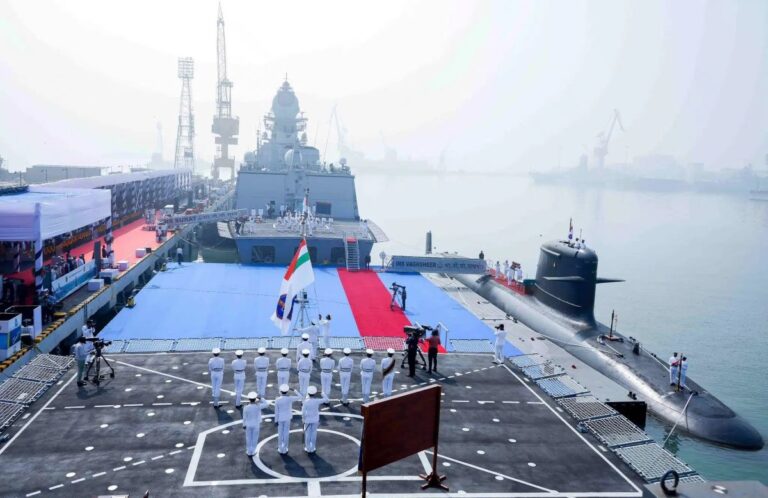
Infleqtion (NYSE: INFQ), a leading neutral-atom quantum technology company, officially announced on October 30 (UTC) that its compact optical atomic clock Tiqker operated continuously without interruption for about two weeks during a recent U.S. Navy maritime exercise. The demonstration aimed to secure an “independent timing source” that would let ships maintain precise time synchronization without external signals in extreme operating environments where Global Positioning System (GPS) signals are blocked or subject to radio interference (jamming and spoofing).
Background: GPS disruption, the biggest threat to modern maritime operations, and the rise of quantum PNT
Modern military operations, particularly command and control (C4I), target acquisition, encrypted communications and the use of precision-guided weapons on naval ships, depend on precise time synchronization down to the nanosecond (one-billionth of a second). Until now, time and position information has mainly been synchronized through GPS satellite signals, but recent advances in electronic warfare have made GPS jamming (signal disruption) and spoofing (signal deception) attacks by adversary nations a real security threat.
In response, the U.S. Department of Defense and the Navy have actively pursued next-generation quantum sensing and atomic clocks that can maintain positioning, navigation and timing (PNT) information independently, without relying on satellite signals.
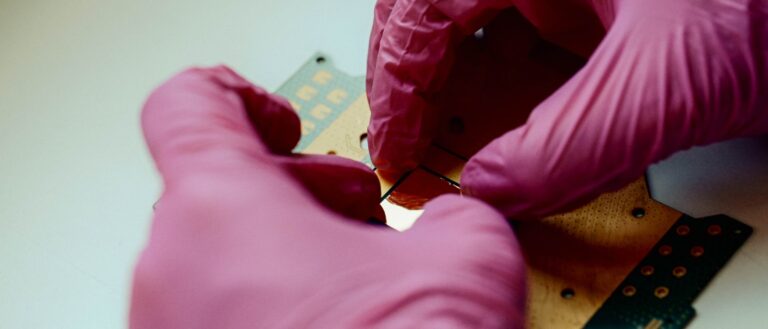
Tiqker is a compact, rugged optical atomic clock that keeps time using optical transitions, in which atoms respond to light. Infleqtion said the clock was carried aboard the U.S. Navy support vessel RV Merlin and operated without stopping for more than two weeks in waters off Southern California (SOCAL). It was tested under large temperature swings and sustained vibration.
The test took place during the Maritime Big Play Pacific (MBP-P) exercise and also supported BARB-26, an undersea and seabed warfare exercise. MBP-P was sponsored by the Office of the Under Secretary of War for Research & Engineering, with participation from the U.S. Navy and Marine Corps and AUKUS partners Australia and the United Kingdom.
The company said the clock is intended to provide independent timing to shipboard equipment such as naval communications and radar when GPS is unavailable, disrupted or spoofed. “The Navy needs reliable timing to navigate, communicate and coordinate operations in the field,” said Matthew Kinsella, CEO of Infleqtion.
Earlier, in 2025, the clock was tested over multiple dives aboard XV Excalibur, the British Royal Navy’s uncrewed experimental submarine, and in 2024 during flight trials on the RJ100 airborne technology testbed of the UK’s QinetiQ.
Ships rely on GPS for navigation, communications synchronization and more, and for an optical atomic clock to become an independent timing source that can replace it, it must withstand the vibration and temperature changes of the real sea. The significance of this test is that the clock ran continuously for more than two weeks under those conditions. However, quantitative performance figures such as stability were not disclosed, and all performance claims are based on Infleqtion’s materials; no independent verification has been confirmed.
Source: Infleqtion
Related articles
- U.S. Navy invests $9 million in distributed quantum sensor network (in Korean)
- Infleqtion pursues first neutral-atom quantum computing IPO… $1.8 billion valuation (in Korean)
- ‘Quantum sensors’ emerge as key technology for drones, medicine, defense and the space industry (in Korean)
This article was translated from the Korean edition of Science Monitor with AI assistance and reviewed by our editors.