






















South Korea is pumping billions into AI semiconductor startups. But behind the nationalist hype lies a web of opaque state subsidies, governance risks, and a biting question of elite privilege.
SEOUL — A Silicon Valley-style success story is being aggressively manufactured in South Korea. The gospel according to Seoul’s policymakers is simple: a trio of homegrown deep-tech champions is poised to break Nvidia’s grip on the global artificial intelligence market.
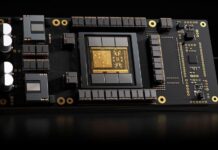
Rebellion, DeepX, and FuriosaAI—collectively hailed as the holy trinity of Korea’s Neural Processing Unit (NPU) market—have become the darlings of the state. Billions of dollars in public funds, including the massive National Growth Fund, are being funneled into these unlisted entities. It is a high-stakes geopolitical gamble. In the semiconductor race, current commercial revenue is virtually non-existent; valuation is fueled entirely by tomorrow’s promise.
But as the financial haze dissipates, a less flattering picture emerges. In a pre-revenue industry, aggressive government efforts to anoint national champions can easily blur the line between industrial policy and favoritism. Beneath the polished investor pitches lie persistent corporate governance disputes, opaque selection mechanisms, and mounting public unease over perceived structural double standards.
The Three Faces of Korea’s AI Chip Ambition
To understand the stakes, it helps to look at the three entrepreneurs at the center of South Korea’s AI chip race. Celebrated by the country’s tech ecosystem, their résumés reflect elite global credentials. Their companies, however, have followed markedly different paths.
The Strategist: Park Sung-hyun (Rebellion)
Among the trio, Park Sung-hyun stands out as the consummate strategist. After graduating from KAIST and earning a doctorate from MIT, he built a career spanning Intel, SpaceX, and Morgan Stanley, where he rose to vice president. The combination of deep technical expertise and financial acumen has made him one of Korea’s most prominent AI entrepreneurs.
In 2020, Park founded Rebellion, leveraging an extensive global network of investors and industry contacts. His biggest strategic move came with the merger of Rebellion and Sapeon Korea, the AI chip subsidiary backed by SK Telecom. The combined company, reportedly valued at nearly $2 billion, has emerged as the country’s highest-profile NPU developer and a centerpiece of Seoul’s AI semiconductor strategy.
Yet the merger has also drawn skepticism. Critics argue that combining two companies with limited commercial revenue may reflect a search for scale and investor confidence as much as genuine market leadership.
The Engineer: Kim Nok-won (DeepX)
If Park represents financial strategy, Kim Nok-won embodies engineering depth.
After earning a doctorate from UCLA, Kim built his career at IBM, Broadcom, Cisco, and, most notably, Apple, where he helped develop early generations of the Neural Processing Unit (NPU) used in the iPhone’s A-series processors.
Founded in 2018, DeepX focuses on edge AI, or what the company describes as “Physical AI”—running AI models directly on devices rather than in cloud data centers. The company says its chips deliver dramatically higher power efficiency than conventional GPU-based solutions while reducing costs.
DeepX has accumulated a sizable patent portfolio and recently expanded its collaboration with Samsung Foundry on next-generation 2-nanometer manufacturing. Even so, the challenge facing the company is familiar across the semiconductor industry: transforming technically impressive prototypes into products adopted at commercial scale.
The Full-Stack Builder: June Paik (FuriosaAI)
June Paik, born Baek Jun-ho, represents a different model altogether—one that combines expertise in both AI software and chip architecture.
A graduate of Georgia Tech, Paik spent nearly a decade at AMD in Silicon Valley developing GPU software before returning to Korea for a brief stint at Samsung Electronics. He founded FuriosaAI in 2017 with the goal of building AI accelerators optimized for large-scale inference workloads.
Its flagship processor, RNGD (“Renegade”), is manufactured by TSMC and has attracted early customers, including Samsung SDS. Yet the company’s greatest challenge today may lie beyond engineering. As global competition for AI semiconductors intensifies, geopolitical considerations, foreign investment scrutiny, and questions surrounding cross-border partnerships have increasingly shaped the company’s strategic options—illustrating how success in AI hardware now depends as much on politics and capital as on silicon itself.
The Citizenship Conundrum: A Question of Duty
In South Korea, nothing short-circuits public goodwill faster than the weaponization of elite privilege to bypass the nation’s mandatory military service. As billions of won in taxpayer money flow into these startups, the overseas timelines of their founders have come under intense scrutiny.
The lightning rod for this controversy is FuriosaAI’s June Paik.Born in Korea and educated at Seoul National University, Paik moved to the United States and later became a U.S. citizen while still subject to South Korea’s mandatory military service requirements. The exact timeline of this transition remains shrouded in corporate boilerplate.
For the average Korean engineer—whose career is forcefully interrupted by nearly two years of conscription—Paik’s trajectory looks less like a standard global career path and more like a structural loophole. The irony is biting: a company heavily subsidized by Korea’s National Growth Fund is led by a foreign national who severed legal ties with the state now funding him.
The contrast with the traditional chaebol aristocracy is sharp. Consider Lee Ji-ho, the eldest son of Samsung Electronics Chairman Lee Jae-yong. Born in the United States as a dual citizen, Lee voluntarily renounced his American citizenship to enlist, currently serving as a South Korean Navy officer. In a society hypersensitive to fairness, the optics are disastrous: while a billionaire heir salutes the flag in uniform, a U.S. citizen receives hundreds of millions in “K-Chips” state subsidies.
Can a company truly claim the mantle of a “National Champion” when its leadership bypassed the ultimate national obligation?
Industrial Policy or Political Capital?
Beyond questions of citizenship and public perception lies a more fundamental concern: how the government decides where public capital should go.
Over the past several years, Seoul has embraced an increasingly interventionist industrial policy, seeking to accelerate the development of a domestic AI semiconductor industry through direct funding, policy coordination, and government-backed investment vehicles. Supporters argue that competing with Nvidia and other global incumbents requires precisely this kind of state activism. Critics counter that the approach risks distorting competition before the market has had a chance to identify viable winners.
The merger between Rebellion and Sapeon Korea illustrates the tension. Officially, the deal was presented as a strategic consolidation designed to eliminate duplication and create a national champion with greater scale. Yet many investors interpreted it differently: as a government-backed effort to avoid politically awkward overlap among publicly supported companies. The prominent role played by state institutions and large conglomerates inevitably raised questions about whether commercial logic or industrial policy ultimately drove the transaction.
That ambiguity becomes even more pronounced when viewed alongside continued public support for FuriosaAI, another company developing AI inference processors for many of the same target markets. If consolidation was intended to reduce duplication, critics ask, what principle justifies simultaneously financing competing firms pursuing similar technological objectives?
None of this implies that supporting multiple companies is inherently misguided. Semiconductor innovation often benefits from parallel experimentation. The difficulty is that the criteria guiding these investment decisions remain largely opaque. Without greater transparency, it becomes increasingly difficult for markets to distinguish between commercially driven investment and politically determined capital allocation.
For investors, uncertainty over policy can become as important as uncertainty over technology.
The Cost of State Capital
Public funding also raises a longer-term governance question.
Startups inevitably dilute founder ownership as they raise successive rounds of capital. When much of that capital originates from government-backed institutions, however, the relationship between entrepreneurs and investors changes. Financial support increasingly carries policy expectations, strategic objectives, and public accountability that differ from those of traditional venture capital.
That does not necessarily undermine innovation. Governments around the world have successfully nurtured strategic industries. But it can alter incentives. Companies may find themselves optimizing as much for policy priorities, grant eligibility, and institutional relationships as for customer demand or technological differentiation.
For a sector as dynamic as AI semiconductors, where product cycles move faster than political ones, that creates an inherent tension. The qualities that governments value—stability, accountability, and risk management—are not always the same qualities that produce disruptive technological breakthroughs.
South Korea’s ambition to build globally competitive AI chip companies is neither unusual nor inherently misguided. Every major economy is searching for ways to reduce dependence on foreign semiconductor suppliers. The challenge is ensuring that industrial policy strengthens markets rather than substitutes for them.
Ultimately, the credibility of Seoul’s AI strategy will depend not only on the amount of public money invested, but also on the transparency of the process behind it. Investors, entrepreneurs, and taxpayers alike deserve to understand how national champions are selected, how public funds are allocated, and how success will ultimately be measured.
If South Korea hopes to produce globally competitive AI companies, capital alone will not be enough. Transparent governance, consistent standards, and market discipline may prove to be the country’s most valuable strategic assets.


David is the Editor of The Science Monitor. Drawing on extensive experience as the former Public Affairs officer for the Republic of Korea (ROK) Navy, he provide in-depth analysis at the intersection of science, technology, global security, geopolitics, and maritime strategy.
Contact: navy@scimonitors.com | LinkedIn